Ask a Delhi contractor where to source cheap plywood or a plastic curtain roll, and there’s a decent chance they’ll point you toward Mundka. This West Delhi industrial belt, sitting right where Rohtak Road meets the Haryana border, has built a genuine reputation around two specific trades — the Assam Timber Market’s furniture and wood business, and a dense cluster of PVC and plastic manufacturers. Here’s what’s actually operating here, exactly where it sits, how to reach it, and what surrounds this large West Delhi industrial zone.
Mundka Industrial Area Overview
| Category | Details |
| Location | West Delhi, along Rohtak Road (NH-9), near the Haryana border |
| PIN Code | 110041 (also referenced as 110081 in some postal records) |
| Developed By | Delhi State Industrial and Infrastructure Development Corporation (DSIIDC) |
| Developed Around | 1990s-2000s, as part of Delhi’s industrial relocation programme |
| Major Industries | PVC products, plastic goods, furniture and timber, packaging, metal works, automobile parts |
| Notable Cluster | Assam Timber Market (furniture and wood trade) |
| Nearest Metro Stations | Mundka and Mundka Industrial Area (both Green Line) |
| Major Road Access | Rohtak Road (NH-9) |
| Nearby Localities | Nangloi, Tikri Kalan, Bahadurgarh, Swaran Park |
From Semi-Rural Outskirts to One of West Delhi’s Biggest Industrial Clusters
Mundka’s growth followed a genuinely familiar pattern for Delhi’s outer industrial belts, though it’s ended up larger than many of its peers:
- The area developed as part of Delhi’s broader plan to organise and relocate manufacturing units out of congested inner-city zones, with DSIIDC formalising much of the estate through the 1990s and into the 2000s
- What was once semi-rural farmland has since filled in with factories, warehouses, workshops, and transport businesses supporting trade not just within Delhi but across Haryana, Punjab, and other parts of North India
- Mundka’s location right on the Delhi-Haryana border along Rohtak Road has made it a genuine gateway point, positioned to serve as a logistics link between the capital and Haryana’s own industrial towns
- The estate today is widely described as one of the largest and busiest industrial hubs in West Delhi, hosting thousands of small and medium enterprises across a genuinely wide span of trades
The Companies and Trades That Define Mundka
Mundka’s industrial identity splits fairly cleanly into a few dominant trades, each with a genuine cluster of businesses built around it:
- Furniture and timber — the Assam Timber Market, a well-known sub-locality within the broader Mundka belt, hosts numerous timber traders and furniture manufacturers; companies like Model Furniture Mart, which supplies school furniture to institutions including IIT Delhi and Netaji Subhash Institute of Technology, operate from registered addresses here
- PVC and plastics — a dense concentration of PVC product manufacturers operates near what’s locally referred to as the “PVC Market” close to Mundka Thana, with businesses like P R Plastic and Rub-Plast (makers of PVC strip curtains and packaging films) representing this segment
- Packaging — packaging material manufacturers supply both the furniture and plastics clusters as well as broader trading businesses across the estate
- Metal works and general fabrication — smaller metalworking and fabrication units round out Mundka’s manufacturing base, supplying components and structural products to regional buyers
- Automobile parts — a segment of the estate’s registered businesses focus on automotive components, adding to the area’s genuinely broad manufacturing mix
- Transport and logistics — given Mundka’s position right at the Delhi-Haryana boundary, transport and car-carrier businesses have a visible presence, facilitating goods movement in both directions
This concentration of furniture/timber trade alongside PVC and plastics manufacturing gives Mundka two genuinely distinct commercial identities operating within the same postal code, something worth knowing before assuming every business here fits a single mould.
Getting To and From Mundka
By Road
Rohtak Road (NH-9) is Mundka’s defining connector, running directly through the estate and linking it to central Delhi in one direction and Bahadurgarh, Haryana, in the other. This position at the state border has made Mundka a practical base for businesses needing efficient freight movement between Delhi and Haryana’s industrial towns.
By Metro
Two Green Line stations serve the estate directly:
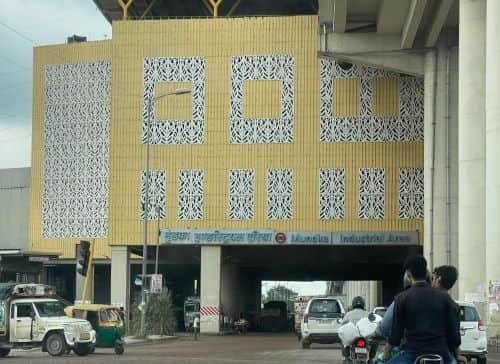
- Mundka Industrial Area station, opened in June 2018, sits directly within the industrial belt itself
- Mundka station, operational since April 2010 and a genuinely busy stop with three tracks, serves the broader Mundka locality just a short distance away
- This dual-station coverage gives Mundka reasonably strong metro access for an estate of its size and distance from central Delhi, helping thousands of workers commute daily without relying purely on road transport
What’s Around the Estate
- Local landmarks like the Durga Mata Mandir and Saini Dharamashala serve the resident and worker population within the broader Mundka locality
- State Bank ATMs and other banking infrastructure are distributed through Mundka Village and the adjoining industrial pockets
- Restaurants and eateries, including long-running local names like Swadishtam Sweets & Restaurant, cater to the daily needs of the substantial workforce employed across the estate’s manufacturing units
- Mundka Police Station (referenced locally as “Mundka Thana”) sits close to the PVC Market cluster and serves as a common landmark for navigating the area
Points Worth Checking Before You Visit
- Mundka’s PIN code is inconsistently recorded across sources — most addresses use 110041, though some postal listings reference 110081, so confirm which applies to a specific business before shipping or planning a visit
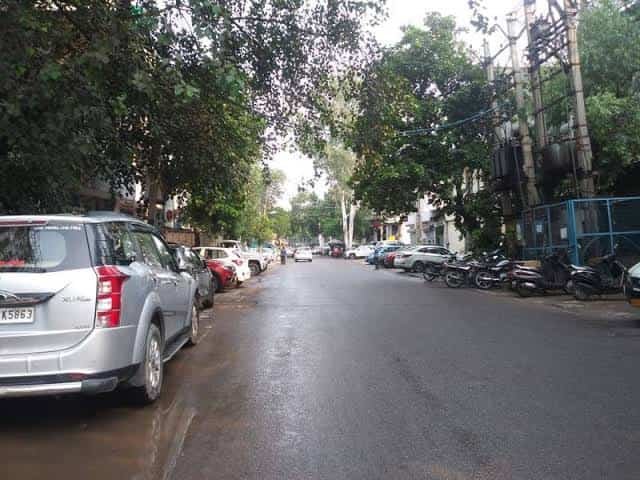
- Given the dense concentration of small manufacturing units in tight lanes around the Assam Timber Market and PVC Market, expect narrow access roads and limited parking; plan visits accordingly rather than assuming easy vehicle access
- Since many businesses here list both a factory address and a separate market-based trading address (Assam Timber Market vs. Mundka Industrial Area proper), verify which one is relevant for your specific need — sourcing raw timber versus visiting a finished-furniture manufacturer, for instance
- Given the mix of PVC, plastics, and timber processing happening in close proximity, standard fire-safety awareness is worth keeping in mind if visiting production floors, as is common advice for any densely packed small-manufacturing zone
Frequently Asked Questions
Q1. What is the PIN code of Mundka Industrial Area, Delhi?
The PIN code is generally recorded as 110041, though some postal records also list 110081 for parts of the broader Mundka locality — worth confirming for a specific address.
Q2. What is the Assam Timber Market, and is it the same thing as Mundka Industrial Area?
Assam Timber Market is a well-known furniture and wood-trading sub-locality within the broader Mundka Industrial Area, so while the two names are sometimes used interchangeably, Assam Timber Market specifically refers to the timber and furniture cluster rather than the entire industrial estate.
Q3. Which metro station should I use to reach Mundka Industrial Area’s PVC and plastics cluster near the police station?
Mundka Industrial Area station, the closer of the two Green Line stops, sits directly within the estate and is generally the more convenient option for reaching the PVC Market area near Mundka Thana.
Q4. What kinds of products can I typically source from Mundka’s manufacturers?
The estate’s two main specialisations are furniture and timber products from the Assam Timber Market cluster, and PVC/plastic goods — including packaging films, strip curtains, and moulded products — from manufacturers concentrated near the PVC Market, alongside smaller metalworking and automotive component businesses.