Few Delhi localities carry a name as literal as Mangolpuri — “the settlement of the poor” — and fewer still have transformed as thoroughly as this one has, from a resettlement colony for displaced families into a genuine North West Delhi manufacturing and residential hub with its own metro line running overhead. Mangolpuri Industrial Area Phase 1, a DSIDC-developed pocket carved into this larger locality, hosts everything from precision engineering firms to embroidery workshops. Here’s what’s actually here, where it sits, how to reach it, and what surrounds this North West Delhi industrial belt.
Mangolpuri Industrial Area Phase 1 Overview
| Category | Details |
| Location | North West Delhi, part of the larger Mangolpuri locality |
| PIN Code | 110083 |
| District | North West Delhi |
| Developed By | Delhi State Industrial and Infrastructure Development Corporation (DSIDC) |
| Layout | Organised into Phase 1 and Phase 2, further divided into Pocket A, Pocket B, and lettered blocks |
| Major Industries | Precision engineering, embroidery, gas equipment manufacturing, general trading, packaging |
| Notable Facility | DSIDC Engineering Complex, Phase-I |
| Nearest Metro Stations | Udyog Nagar, Peeragarhi (both Green Line) |
| Nearest Railway Station | Mangolpuri Railway Station |
| Major Road Access | Rohtak Road (NH-9), Kanjhawala Road, Outer Ring Road |
A Resettlement Colony That Grew Into an Industrial Belt
Mangolpuri’s story is genuinely different from Delhi’s other DSIDC-planned estates, and it’s worth understanding to make sense of the area’s layout today:
- The broader locality was originally developed as a resettlement colony, and that legacy is still visible in how the area is organised — into lettered blocks (A through Z and beyond) rather than a conventional industrial sector-and-plot grid
- The industrial pockets, Phase 1 and Phase 2, were carved out within this larger residential fabric rather than built as a standalone estate, which is why factory addresses here routinely reference both a phase/pocket and a nearby residential block for orientation
- DSIDC’s Engineering Complex within Phase 1 represents the area’s more formally organised manufacturing zone, distinct from the smaller ground-floor and first-floor workshop units scattered through the residential blocks
- This blended residential-industrial character means Mangolpuri functions less like a dedicated factory zone and more like a working-class neighbourhood where manufacturing happens on the ground floors of buildings people also live above
What’s Actually Manufactured Here
Mangolpuri Industrial Area Phase 1’s registered business base leans toward small-scale, labour-intensive manufacturing rather than large corporate plants:
- Precision engineering — Volmac Engineering and similar firms operate from within the DSIDC Engineering Complex, producing machined components and engineering goods
- Gas equipment — Yadav Gastech manufactures gas-related equipment from a registered Phase 1 address
- Embroidery and textiles — Shree Banke Bihari Embroidery and comparable units reflect a genuine embroidery and garment-finishing trade concentrated in this belt
- Packaging and printing — smaller registered packaging and printing businesses operate across the Phase 1 and Phase 2 blocks
- General trading and business services — a wide range of companies, from marketing firms to farm developers, maintain registered addresses here without necessarily manufacturing on-site, reflecting how the area also functions as an affordable business registration address
- Electronics retail and repair — shops like Sagar Electronics serve both the residential and industrial population with sales and repair services
This mix of formal engineering, informal garment work, and general trading is fairly typical of Delhi’s older resettlement-colony-linked industrial pockets, where manufacturing scale tends to be small and ownership highly fragmented across individual plots.
Getting to Mangolpuri
By Road
Rohtak Road (NH-9) is the dominant connector, running along the southern edge of the locality and linking it to central Delhi in one direction and Haryana in the other. Kanjhawala Road and the Outer Ring Road add further connectivity, and together these three roads are what local residents point to as giving Mangolpuri genuinely robust intra-city access despite its somewhat peripheral North West Delhi position.
By Metro
Two Green Line stations bracket the industrial area:
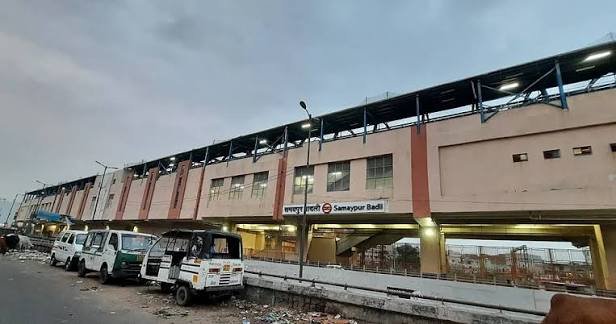
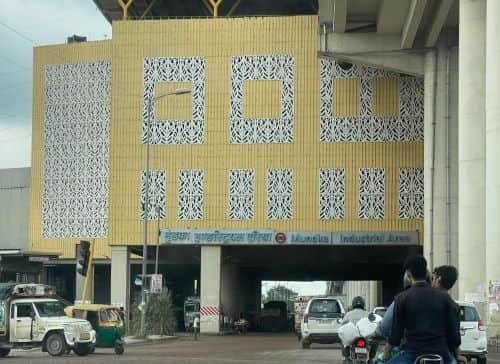
- Udyog Nagar station sits closest, roughly 1.7 km from the core industrial blocks, an elevated stop that’s been operational since April 2010
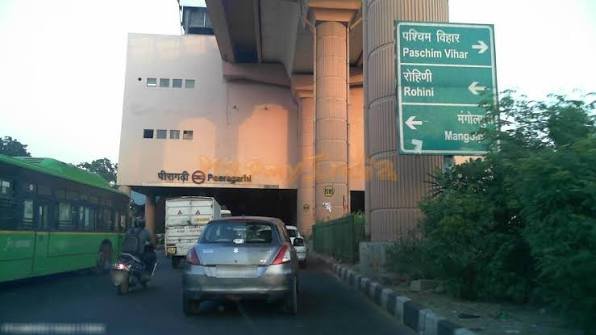
- Peeragarhi station, a short distance further at around 2.9 km, adds a second option and will eventually double as an interchange once the Magenta Line’s northward extension reaches it, expected to ease cross-city travel toward both airports once completed
- There’s also a separate Mangolpuri metro station on the Pink Line, distinct from the Green Line stops above, giving the broader locality genuinely multi-line coverage even if it sits a bit further from the Phase 1 industrial blocks specifically
By Rail
Mangolpuri Railway Station, just under a kilometre from the industrial area, provides an additional and genuinely convenient option, particularly for workers commuting from stations further out on the same suburban line.
What Surrounds the Industrial Blocks
Because Mangolpuri Industrial Area Phase 1 sits embedded within a residential locality rather than isolated on its own, everyday amenities are unusually close at hand:
- The Mangolpuri A Block Market and similar block-level markets handle daily grocery and retail needs directly within walking distance of the industrial pockets
- A Delhi Government Dispensary operates within the Block E area, giving workers basic healthcare access without needing to travel far
- Dhabas and small eateries, including long-running local names, cluster around the industrial blocks to serve the daytime workforce
- Petrol pumps, ATMs from Central Bank, Axis Bank, and Punjab Bank, and a scattering of colleges and training institutes round out the area’s everyday infrastructure
Before You Head There
- Mangolpuri’s addressing convention — phase, pocket, and block, all potentially with similar numbers — genuinely trips up first-time visitors; always confirm all three identifiers rather than assuming a plot number alone is enough
- Don’t confuse the Green Line’s Udyog Nagar/Peeragarhi access with the separate Pink Line Mangolpuri metro station — they serve different parts of the broader locality and aren’t within easy walking distance of each other
- Given how many small workshops here operate out of what look like residential buildings, exercise the same caution you would in any dense mixed-use lane — narrow access roads and limited parking are the norm, not the exception
- Since so many registered companies here list residential-style block addresses rather than dedicated factory plots, verifying whether a business actually manufactures on-site or simply uses the address for registration is worth doing before assuming production capacity
Frequently Asked Questions
Q1. What is the PIN code of Mangolpuri Industrial Area Phase 1?
The PIN code is 110083, shared across the entire Mangolpuri locality including both Phase 1 and Phase 2 of the industrial area.
Q2. Are Udyog Nagar metro station and Mangolpuri metro station the same thing?
No — Udyog Nagar sits on the Green Line and is the closer stop to the Phase 1 industrial blocks, while the separate Mangolpuri metro station on the Pink Line serves a different part of the broader locality; check which one is nearer to your specific destination before planning a trip.
Q3. Why does Mangolpuri Industrial Area have such an unusual addressing system compared to other Delhi industrial estates?
The locality began as a resettlement colony organised into lettered residential blocks rather than a purpose-built industrial grid, so when DSIDC later carved out Phase 1 and Phase 2 industrial pockets within it, addresses ended up referencing both a phase/pocket and a nearby residential block for clarity.
Q4. What kind of businesses operate out of Mangolpuri Industrial Area Phase 1?
Mostly small-scale operations — precision engineering and gas equipment manufacturing within the formal DSIDC Engineering Complex, alongside embroidery, packaging, and general trading businesses spread across the area’s residential-style blocks.