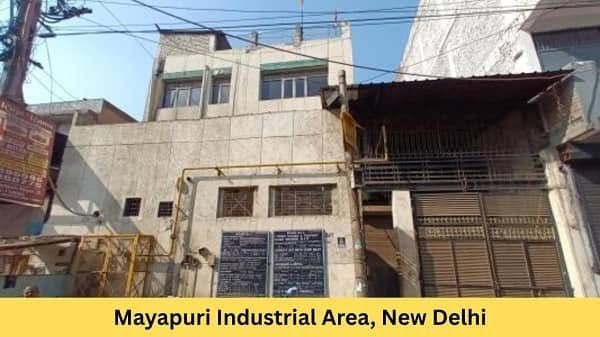
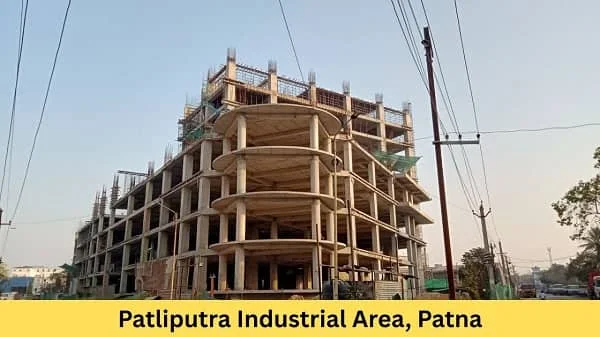
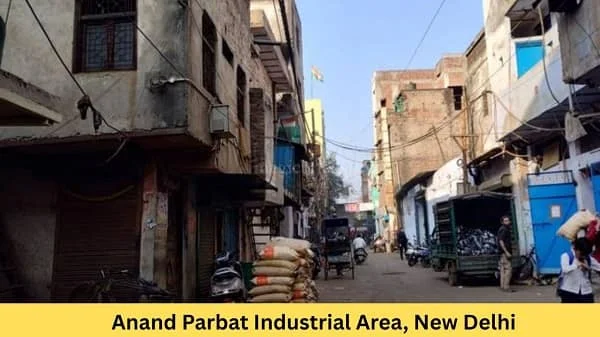
Walk down any gali in Anand Parbat Industrial Area on a weekday morning and you’ll hear the area before you see it — the clang of metal presses, the hum of anodizing units, the rattle of casting workshops. Tucked between Karol Bagh and Patel Nagar in Central Delhi, Anand Parbat Industrial Area is one of the capital’s oldest small-scale manufacturing clusters, home to hundreds of engineering, casting, electroplating, and printing units that have supplied Delhi’s markets for decades. This guide breaks down where it sits, what’s made here, how to reach it, and what facilities exist around the belt.
Anand Parbat Industrial Area Overview
| Category | Details |
| Location | Central Delhi, off Rohtak Road, near Karol Bagh and Patel Nagar |
| PIN Code | 110005 |
| District | Central Delhi |
| Administering Authority | DSIIDC (Delhi State Industrial and Infrastructure Development Corporation) |
| Major Industries | Engineering & machine tools, casting, anodizing, electroplating, automotive components, offset printing, plastics |
| Nearest Metro Stations | Shastri Nagar (Red Line), Inderlok (Red/Green Line), Patel Nagar (Blue Line), Karol Bagh (Blue Line) |
| Nearest Railway Stations | Delhi Sarai Rohilla, Daya Basti |
| Major Roads | Rohtak Road, Pusa Road, Desh Bandhu Gupta Road, Military Road |
| Nearby Localities | Karol Bagh, Patel Nagar, Shastri Nagar, Nehru Nagar, Kathputli Colony |
| Nearest Airport | Indira Gandhi International Airport, approx. 15–18 km via NH48 |
| Redevelopment Status | Covered under the Delhi Master Plan redevelopment scheme; land under DDA/DSIIDC oversight |
Where Exactly Is Anand Parbat Industrial Area
Anand Parbat sits in the heart of Central Delhi, wedged between the commercial buzz of Karol Bagh and the residential lanes of Patel Nagar and Shastri Nagar. It falls under the 110005 PIN code zone, shared with several other Karol Bagh-area localities. The industrial pocket itself is a dense grid of numbered galis (lanes) — Gali No. 1 through Gali No. 28 and beyond — packed with small plots that house workshops, sheds, and godowns rather than large factory campuses. This tight layout is part of what gives the area its character: it functions less like a modern industrial park and more like a working-class manufacturing township that has grown organically since it was first set up.
What Kind of Companies Operate Here
Anand Parbat is not home to large corporate manufacturers — it’s built around thousands of small and micro-enterprises, many of them family-run for two or three generations. The business mix here includes:
- Engineering and machine tool units — makers of grinding machines, polishing equipment, and industrial hand tools
- Metal casting and foundry works — both ferrous and non-ferrous casting, including CI (cast iron) casting
- Electroplating and anodizing units — surface treatment for metal components used across Delhi-NCR’s manufacturing supply chain
- Automotive component workshops — engine parts, battery components, and spares supplied to local auto markets
- Offset printing and packaging units — cardboard and carton printing/packing operations
- Plastic and household goods manufacturers — smaller units producing everyday plastic products
Most of these are registered as proprietorships or small partnerships, often with fewer than 25 employees, and many are listed with GST registration as manufacturers rather than traders. The area has also historically supplied pharmaceutical machinery, industrial pumps, and rollers to buyers across North India, giving it a reputation as a dependable sourcing hub for specialised, low-volume manufacturing.
A Brief Note on Ownership and Redevelopment
Anand Parbat’s industrial land has an unusual legal history worth knowing if you’re dealing with any unit here:
- The land originally belonged to the Ramjas Foundation before ownership was transferred to the Delhi Development Authority (DDA)
- The area is officially recognised under the Delhi Master Plan redevelopment scheme, alongside Samaipur Badli and Shahdara
- DSIIDC has been handling allotment, lease administration, and conversion of industrial sheds from leasehold to freehold status for units here
- Relocation schemes over the years have moved some non-conforming units from residential zones into formal industrial plots in and around Anand Parbat
This background matters for anyone renting or buying industrial space here — plot titles and lease status can vary considerably from unit to unit.
Getting Around: Metro, Roads, and Rail
Roads
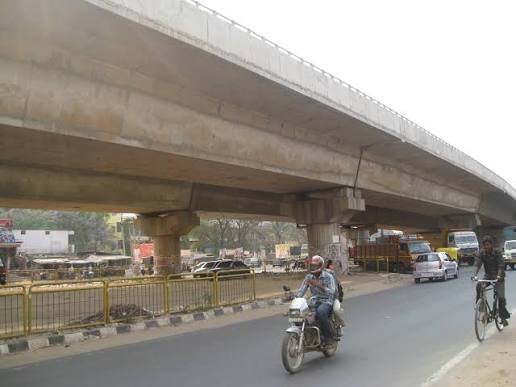
Anand Parbat is well served by arterial roads that connect it directly to the rest of Central and West Delhi. Rohtak Road and Pusa Road run along the edges of the industrial belt, while Desh Bandhu Gupta Road and Military Road provide internal access. These roads link the area to Karol Bagh, Rajendra Place, and further out to Ring Road, making it straightforward to move goods in and out by truck or tempo during permitted hours.
Rail
For freight and commuter rail access, Delhi Sarai Rohilla railway station is the closest major station, followed by Daya Basti. Both stations connect Anand Parbat to long-distance and suburban rail networks, which is useful for workers commuting from outer Delhi and for occasional cargo movement.
Metro
Delhi Metro coverage around Anand Parbat is genuinely strong, with four stations within a roughly 2 km radius:
- Shastri Nagar (Red Line) — closest station, about 1.1–1.6 km away
- Inderlok (Red Line/Green Line interchange) — around 1.4–1.6 km away, offering multi-line access
- Patel Nagar (Blue Line) — roughly 1.9–2.2 km away
- Karol Bagh (Blue Line) — around 1.5–2.4 km away depending on the exact plot location
This spread across the Red and Blue Lines means workers and visitors can reach Anand Parbat from almost any part of Delhi with at most one interchange.
What’s Nearby: Markets, Malls, and Everyday Essentials
Markets
Anand Parbat sits right next to some of Delhi’s most established trading hubs. Ajmal Khan Road and the broader Karol Bagh market are within a couple of kilometres, offering everything from wholesale goods to retail shopping. Nearby, Nehru Nagar Main Market and East Patel Nagar Market serve day-to-day retail needs for workers and residents in the belt.
Malls
While Anand Parbat itself has no organised mall, Karol Bagh’s commercial strip nearby functions as a de facto shopping district with branded retail outlets, and shoppers can also reach Rajouri Garden’s mall cluster within a short drive for a more conventional mall experience.
Everyday Essentials
- Saraswati Memorial Hospital and other local clinics serve immediate medical needs within the locality
- Government schools and a handful of private schools operate in and around Patel Nagar and Shastri Nagar
- Bank branches, ATMs, and small eateries are scattered through the industrial galis, catering largely to the working population
- Anand Parbat Bus Terminal and the Than Singh Nagar bus stop provide additional last-mile connectivity for workers without private vehicles
Points Worth Knowing Before You Visit or Set Up Here
- The internal gali numbering system can be confusing for first-time visitors — carrying the exact plot/gali number is essential, as Google Maps navigation within the belt is not always precise
- Parking for four-wheelers is limited inside the industrial lanes; most visitors park near the main road and walk in
- Several units here handle hazardous processes like electroplating and anodizing, so casual visitors should check with the specific unit before entering工作 areas
- Lease and ownership status varies by plot due to the area’s redevelopment history, so due diligence is important before any commercial transaction
- Peak working hours typically run from mid-morning to early evening on weekdays, with reduced activity on Sundays
Frequently Asked Questions
Q1. What is the PIN code of Anand Parbat Industrial Area?
The PIN code is 110005, shared with the wider Anand Parbat and Karol Bagh postal circle in Central Delhi.
Q2. Which is the nearest metro station to Anand Parbat Industrial Area?
Shastri Nagar on the Red Line is generally the closest, though Inderlok, Patel Nagar, and Karol Bagh stations are all within a comparable walking or short auto-rickshaw distance.
Q3. What types of industries are mainly found in Anand Parbat?
The area is dominated by small-scale engineering, metal casting, electroplating, anodizing, automotive component manufacturing, and offset printing units.
Q4. Is Anand Parbat Industrial Area suitable for setting up a new manufacturing unit today?
It’s largely built out with established units, and much of the land falls under an active DDA/DSIIDC redevelopment scheme, so new allotments are limited — prospective businesses should verify current plot availability and lease status directly with DSIIDC before proceeding.