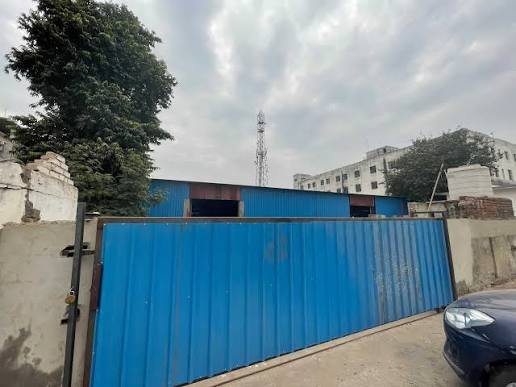
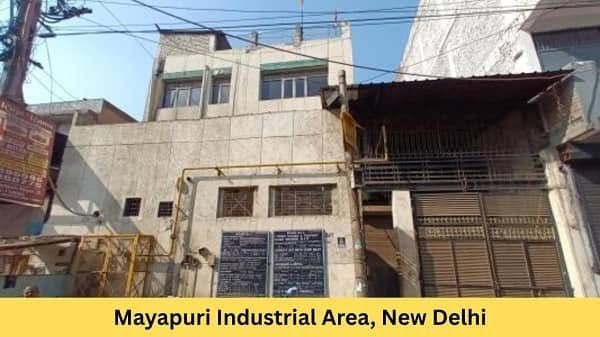
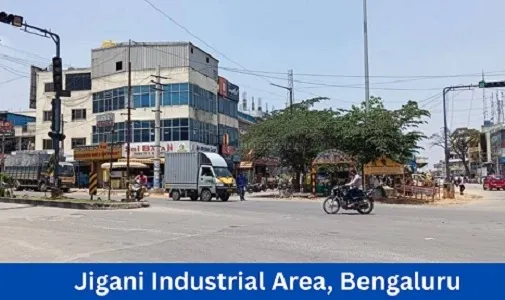
Head toward Delhi’s south-western edge, close enough to the Haryana border that the city starts thinning into open land, and you’ll find Najafgarh Industrial Area — a developing cluster of small workshops and fabrication units that has grown alongside one of Delhi’s fastest-changing suburban towns. Unlike the capital’s older, established industrial estates, Najafgarh represents a genuinely emerging manufacturing zone, benefiting from lower land costs and a metro line that arrived only a few years ago. Here’s a complete breakdown of the companies operating here, its exact location, connectivity, and the facilities surrounding this South West Delhi industrial belt.
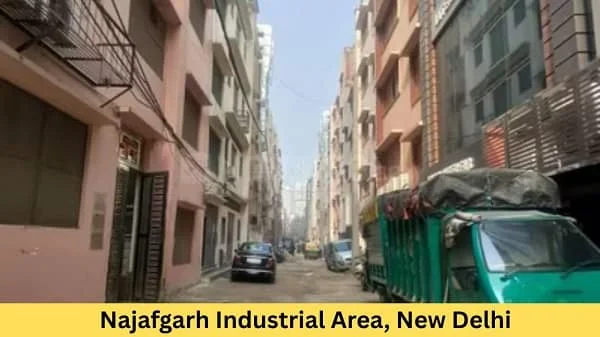
Najafgarh Industrial Area Overview
| Category | Details |
| Location | South West Delhi, near Najafgarh town, close to the Delhi-Haryana border |
| PIN Code | 110043 |
| District | South West Delhi |
| Major Industries | Metal fabrication, welding, construction materials, warehousing, small-scale manufacturing |
| Character | Developing industrial cluster with lower land costs, attractive to micro and small enterprises |
| Nearest Metro Station | Najafgarh Metro Station (Grey Line) |
| Other Nearby Metro Stations | Nangli, Dhansa Bus Stand (both Grey Line) |
| Nearest Railway Station | Delhi Cantonment Railway Station |
| Major Road Access | Najafgarh-Dhansa Road, Outer Ring Road (via Dwarka) |
| Nearby Localities | Nangli Sakrawati, Chhawla, Dwarka |
| Nearest Airport | Indira Gandhi International Airport, approx. 25-30 km |
Where Najafgarh Industrial Area Sits in Delhi
Najafgarh Industrial Area occupies a stretch of South West Delhi close to Najafgarh town itself, positioned near the Delhi-Haryana border and falling under the 110043 PIN code shared with several surrounding villages, including Dhansa, Nangli Sakrawati, and Dichaun Kalan. This puts it in a genuinely different category from Delhi’s central and older industrial estates — Najafgarh developed more gradually as the surrounding town urbanised, giving the area a more suburban, semi-rural character compared to belts like Wazirpur or Okhla. Its proximity to Dwarka and the Outer Ring Road, however, has steadily improved its integration into the wider Delhi-NCR economy.
An Emerging Industrial Cluster on Delhi’s Edge
Najafgarh’s industrial development reflects a genuinely different growth pattern compared to Delhi’s older, DSIIDC-planned estates:
- The area has gradually emerged as a hub for small-scale industries, workshops, and storage facilities rather than being purpose-built as a single organised estate from the outset
- Relatively lower land costs compared to central Delhi industrial zones have made it an attractive option for micro and small enterprises looking to set up operations without the premium pricing found closer to the city centre
- The industrial ecosystem here is described as simple but effective, focused primarily on meeting everyday local and regional demand rather than large-scale export manufacturing
- Connectivity has been steadily improving, particularly since the Grey Line metro extension reached Najafgarh in 2019, giving the area a genuine boost in accessibility that older industrial zones in the vicinity didn’t originally have
The Kind of Companies Operating in Najafgarh
Najafgarh’s industrial base is built around small and medium enterprises serving local and regional markets, with a distinct focus on labour-intensive, traditional manufacturing. Key sectors include:
- Metal fabrication and welding — numerous workshops specialise in fabrication and welding work, producing gates, grills, and structural components used extensively in residential and commercial construction across the region
- Construction materials and hardware — units here manufacture building materials such as pipes, fittings, and basic hardware items supplying the local construction trade
- Warehousing and storage — a meaningful share of the area’s economic activity involves warehousing and storage operations supporting local businesses and traders in nearby Dwarka, Chhawla, and surrounding localities
- General small-scale manufacturing — smaller manufacturing units producing a range of everyday goods round out the estate’s business base, catering primarily to demand within South West Delhi rather than distant markets
- Auto parts and allied trade — given the broader Najafgarh Road corridor’s historical association with automotive and industrial trade, smaller allied businesses continue to operate in and around the belt
This focus on construction-related fabrication and warehousing reflects Najafgarh’s role as a practical, cost-effective manufacturing base serving the rapidly urbanising residential and commercial development happening across South West Delhi.
Getting Around: Metro, Roads, and Rail
Roads
Najafgarh-Dhansa Road serves as the area’s primary local connector, linking the industrial belt to Najafgarh town and onward toward the Haryana border. The Outer Ring Road, accessible via Dwarka, provides broader connectivity toward other parts of Delhi, giving the estate a practical route for freight and passenger movement despite its relatively peripheral location within the city.
Rail
Delhi Cantonment Railway Station is the nearest significant rail link, though it requires a road journey from Najafgarh itself, offering both passenger and limited freight connectivity for businesses in the area needing broader rail access.
Metro
Metro connectivity is where Najafgarh has seen its most significant recent transformation:
- Najafgarh Metro Station, an underground station on the Grey Line, opened to the public on 4 October 2019, bringing rapid transit access directly into the town for the first time
- The Grey Line runs between Dwarka-Kakrola and Dhansa Bus Stand, with Nangli and Najafgarh as intermediate stations, and connects to the wider Delhi Metro network via an interchange at Dwarka on the Blue Line
- The line was further extended to Dhansa Bus Stand in September 2021, pushing metro access even further toward the Haryana border area
- Najafgarh station itself is notably deep — situated 21 metres underground — and is the only metro depot station in the network designed to operate both broad gauge and standard gauge trains, a distinctive engineering feature tied to its connection with the Najafgarh Depot
What’s Nearby: Markets, Malls, and Everyday Essentials
Markets
Najafgarh town’s Main Chowk area and surrounding local markets serve the daily shopping and trading needs of the industrial workforce, offering everyday retail alongside wholesale trade options for the local construction and hardware trade.
Malls
Organised retail directly within Najafgarh remains limited, and workers typically travel toward Dwarka’s more developed commercial district for mall-based shopping and entertainment, now made considerably easier by the Grey Line’s direct metro connection.
Everyday Essentials
- Local clinics and healthcare facilities serve the immediate industrial workforce and Najafgarh’s growing resident population, with larger hospitals accessible via a drive toward Dwarka or central Delhi
- Schools and educational institutions in and around Najafgarh town serve families based in the area
- Banking infrastructure and ATMs are present through Najafgarh’s commercial areas, supporting the local business community
- The additional parking facility built at Najafgarh Metro Station, designed under a multi-modal integration model, has improved last-mile access for workers and visitors arriving by private vehicle
Points Worth Knowing Before You Visit or Set Up Here
- Given Najafgarh’s developing and somewhat informal industrial character, always confirm the exact plot or workshop location directly, since the area doesn’t follow the same rigid sector-and-plot numbering common to older DSIIDC estates
- Connectivity, while improving significantly with the Grey Line, is still described as moderate compared to central Delhi industrial zones — factor in road travel time for anything beyond the immediate Dwarka-Najafgarh corridor
- Given the concentration of fabrication and welding units, standard workshop safety precautions apply for anyone visiting production areas
- Lower land costs here make Najafgarh attractive for new small enterprises, but businesses should verify current zoning and compliance requirements directly, since the area’s semi-developed industrial status means regulations can differ from more established estates
- Since the region borders Haryana, businesses relying on frequent inter-state logistics should factor in this proximity when planning distribution routes
Frequently Asked Questions
Q1. What is the PIN code of Najafgarh Industrial Area, Delhi?
The PIN code is 110043, shared with Najafgarh town and several surrounding villages in South West Delhi.
Q2. Is Najafgarh Industrial Area connected to the Delhi Metro?
Yes — Najafgarh Metro Station on the Grey Line has served the area directly since October 2019, connecting through an interchange at Dwarka to the wider Delhi Metro network, with the line further extended to Dhansa Bus Stand in 2021.
Q3. What kinds of businesses are typically found in Najafgarh Industrial Area?
The area is dominated by small and medium enterprises focused on metal fabrication, welding, construction materials like pipes and fittings, and warehousing, primarily serving local and regional demand rather than large-scale export manufacturing.
Q4. Why might a small business consider setting up in Najafgarh rather than a more established Delhi industrial estate?
Land and operating costs here are relatively lower than in central Delhi’s older industrial zones, and the recent Grey Line metro connection has meaningfully improved accessibility, making it a practical option for micro and small enterprises that don’t require the infrastructure of a fully organised estate like Okhla or Wazirpur.